
Vix Keyart: Se llamaba Pedro Infante
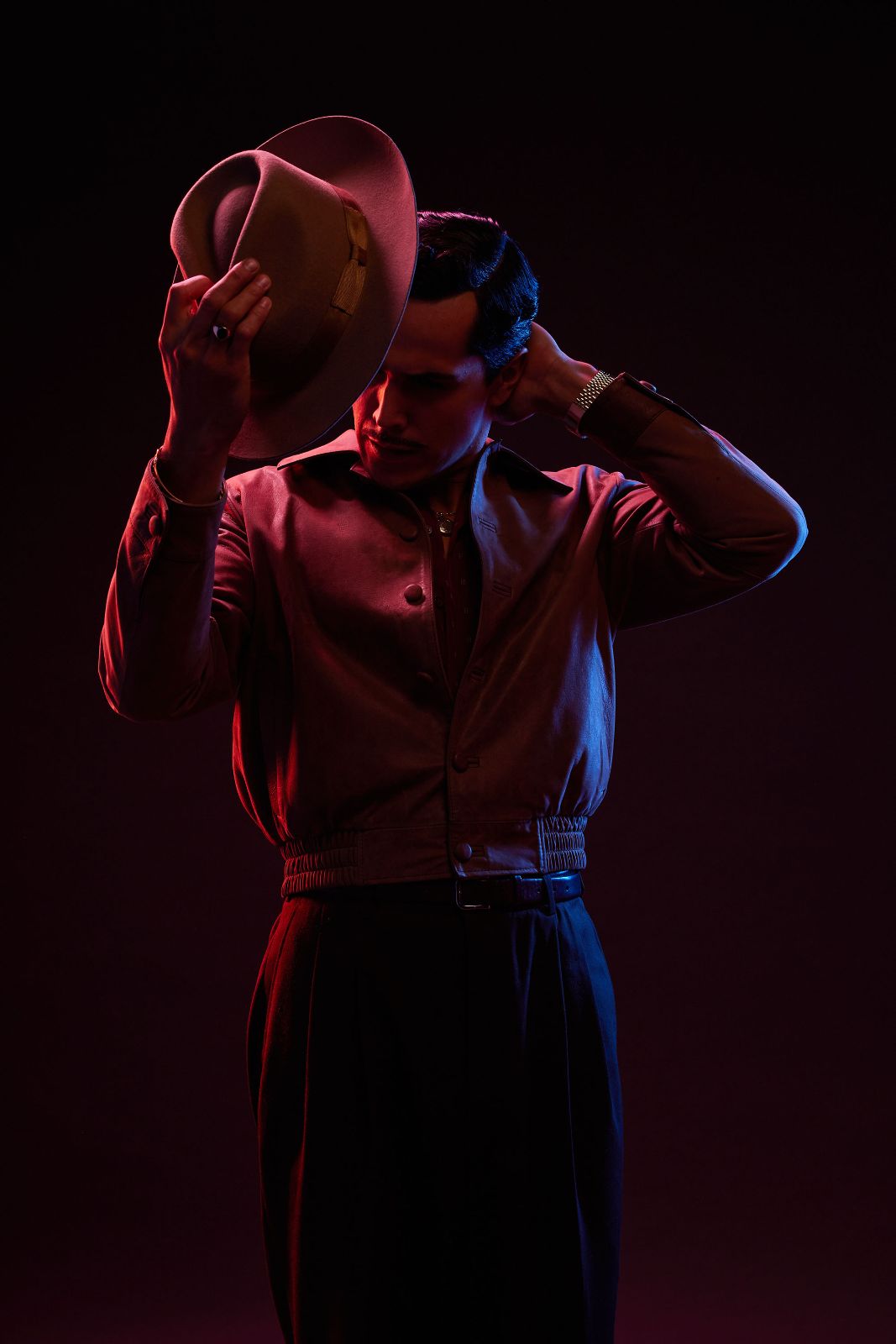
The air in the studio feels dense, practically vibrating with the ghosts of golden-era cinema. A heavy crimson light bleeds across the seamless backdrop, violently undercut by a sharp, icy blue striking from the shadows. I watch through the viewfinder as the brim of a classic pale fedora tilts downward, obscuring eyes but revealing a jawline carved by legacy. We are deep in the heart of Mexico City, far from the frantic, sun-drenched avenues of Miami, yet I find myself chasing the exact same cinematic contrast of shadow and neon that defines my visual language. There is a specific rhythm to this city, a profound reverence for its legends, and tonight, we are bottling that rhythm within these four soundproof walls.
When you are tasked with capturing the essence of an absolute titan of Latin American culture, the responsibility carries a unique, palpable weight. This isn't just another day of standard Studio Work, where you clock in, hit the lights, and leave. This is a resurrection of a cultural deity. We are here conceptualizing and shooting the hero imagery for Se llamaba Pedro Infante, a monumental original series produced for the streaming platform Vix — my second key art collaboration with the platform after summoning María Félix with Ximena Romo. Cultivating the visual identity for such a deeply anticipated piece of Entertainment requires a delicate, deliberate orchestration of reverence and modernity. I wanted to strip away the archival dust and the sepia tones usually associated with this era, presenting the icon—or rather, the actor inhabiting his legendary skin—with a fierce, raw, and colorful intimacy that demands attention from a modern audience.
In front of my lens is Mario Moran, though for these fleeting, intense hours under the crossfire of red and blue gels, Mario has entirely vanished. He isn't merely hitting his marks or finding his light; he is breathing the bravado, the quiet tragedy, and the undeniable magnetism of Infante. He adjusts the lapels of his tailored leather jacket, his fingers catching the retro watch on his wrist, and suddenly I am staring into the past. It hits a deeply personal chord for me, resonating somewhere beneath the professional surface. Watching his posture, the quiet, masculine swagger, the way he commands the negative space around him, I am instantly reminded of my grandfather. It’s that same stoic, mid-century composure, that mixed Cuban-Colombian pride that I grew up observing and idolizing. It is a posture that tells a complete story before a single word is ever uttered.
Collaborating on this aesthetic vision alongside the brilliant creative minds at Blanco Lorenz Agency, our mutual mandate was to forge something that transcends a typical, throwaway promotional poster. We wanted an image that felt like a lingering, mournful note of a late-night ranchera echoing through a smoky, neon-lit cantina at three in the morning.
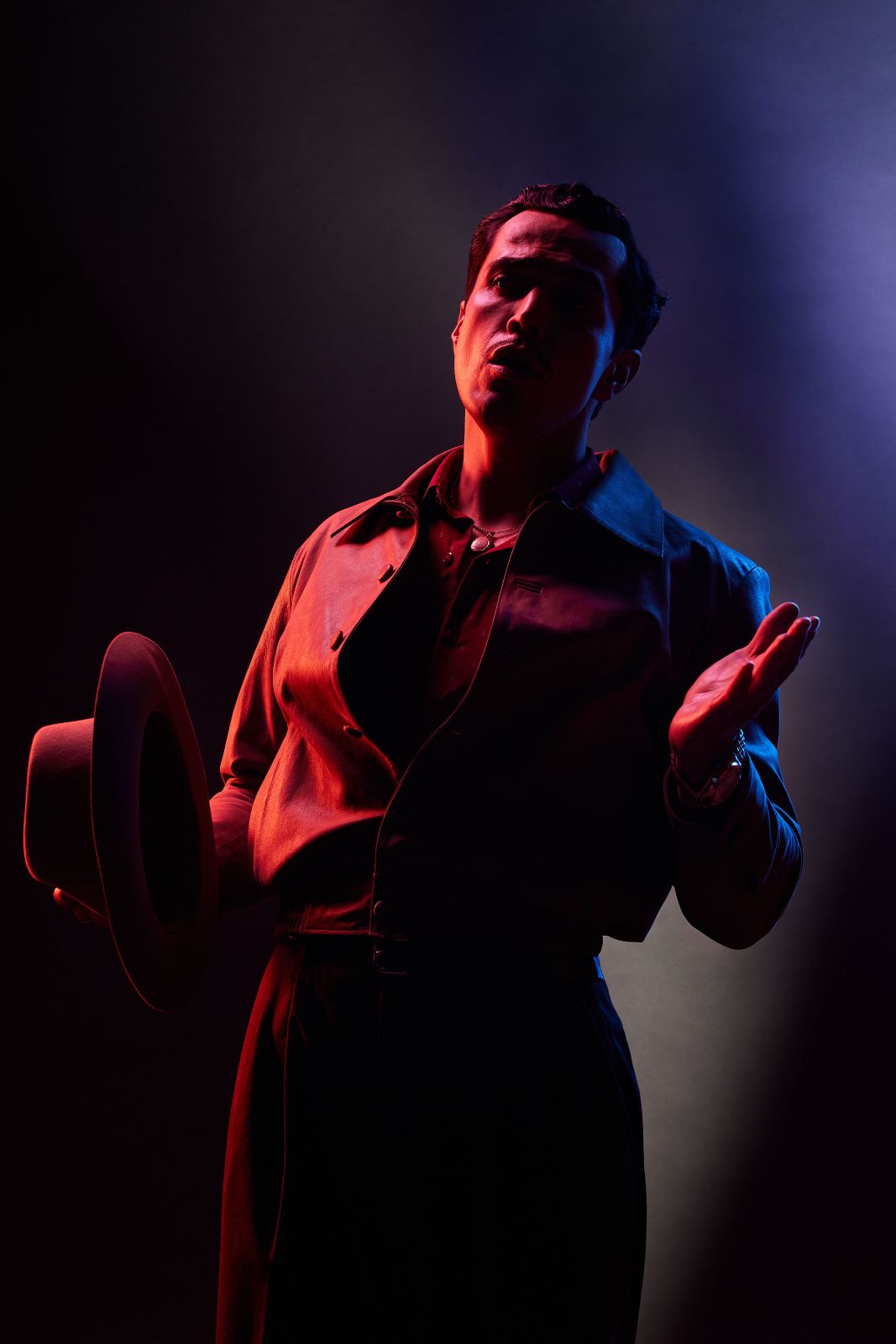
The light shapes this narrative every bit as much as the subject does. I specifically designed and chose this aggressive, dual-color saturation to radically modernize the nostalgia we were playing with. The deep, enveloping red feels like the intense heat of passion, a nod to the fiery melodrama of Mexican cinema’s golden age, while the sharp, unforgiving blue edge lighting pulls the frame violently into contemporary space. As Mario lifts his chin, parting his lips as if caught mid-song—or perhaps mid-confession—the blue light wraps tightly around his jaw and catches the subtle, rich texture of the leather. His left hand is raised in an open gesture that functions as both a charismatic invitation and a vulnerable plea. It’s a fleeting moment of theatrical vulnerability.
Photography, especially in the high-stakes, meticulously planned realm of commercial portraiture, too often demands absolute precision at the expense of genuine poetry. But today, the poetry in the room is simply inescapable. Every frame we capture tethered to the spot feels like an active, breathing dialogue between the past and the present. You can physically feel the heavy weight of the silver screen translating seamlessly into high-resolution digital data. I step back from the camera for just a second, instructing Mario to hold that precise, open gesture, letting the heavy silence of the room command our collective focus. The mechanical, staccato rhythm of the shutter becomes the baseline to his brilliant, silent performance.
By the time we finally call a wrap on the production, the studio floors are heavily scuffed, the massive strobe heads are radiating warmth to the touch, and there is a profound, collective exhale from the entire crew. We traveled here looking for the faint echo of a legend, and under the vibrant collisions of light in that deeply shadowed room, we actually found his pulse. The light fades as the fedora tips one last time, hiding his eyes, keeping the mythology powerfully alive just a little longer.