
Leica Fotografie International
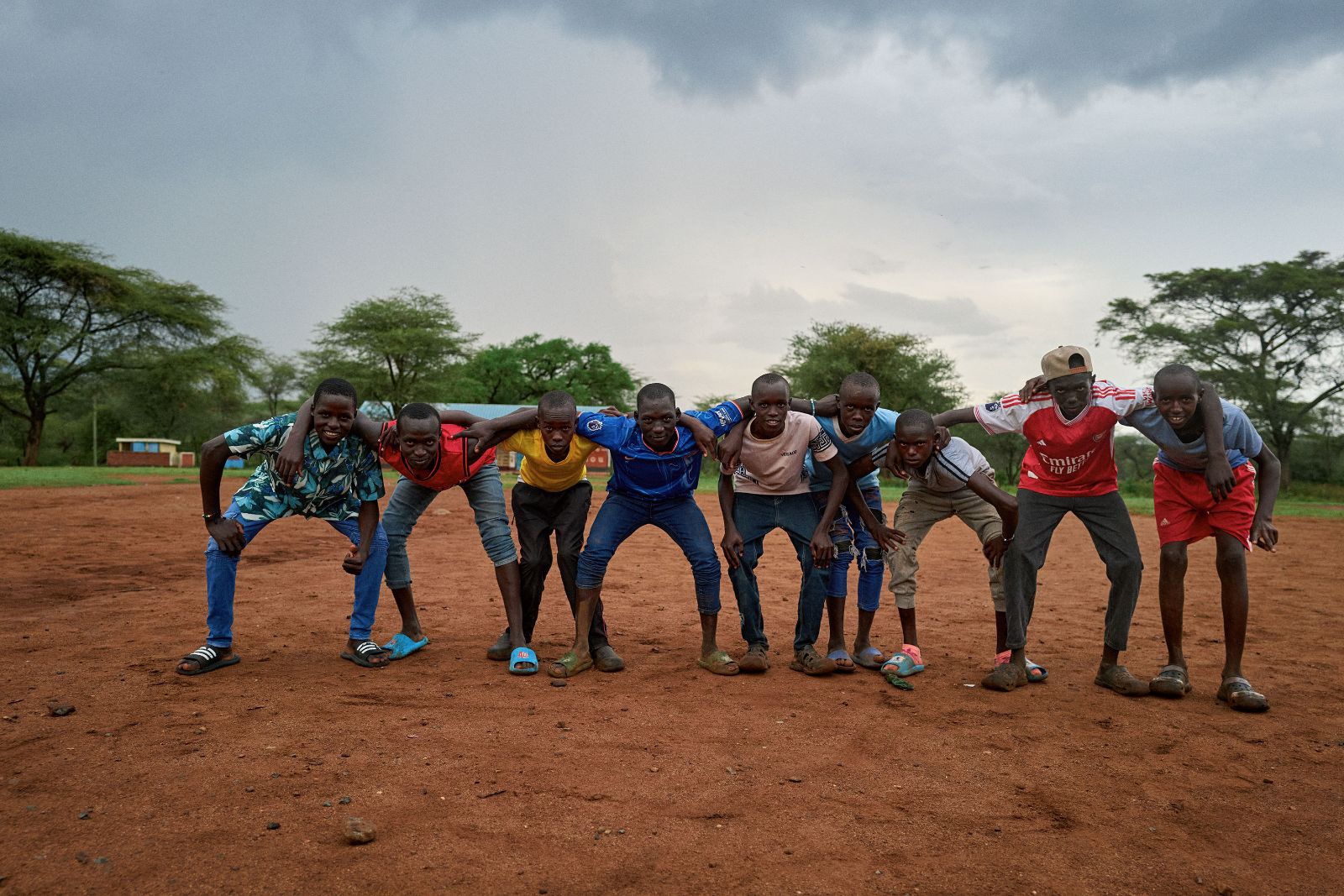
The air in Iten is heavy, thick with the metallic scent of impending rain and the rich, iron tang of red earth. Known globally as the high-altitude training ground for the world's elite distance runners, this small town pulses with a different kind of athletic energy in the fading afternoon light. I am standing on a makeshift pitch, the kind of raw, unmanicured ground where local legends are born. The sky above is a sprawling canvas of bruised purple and storm-gray clouds, acting as the perfect, massive softbox. Before me, ten boys have spontaneously formed a human barricade. They are a local soccer team, but in this exact fraction of a second, they look like a youthful battalion. Arms slung tightly over each other’s shoulders, they lean forward in a unified, grounded stance.
Look closely at their feet—some in worn-out slides, some in bright blue Crocs, others pressing bare heels directly into the Kenyan soil. Their clothes are a vivid mosaic against the muted, earthy landscape: a brilliant crimson Arsenal jersey catching the dim light, a splash of golden yellow, deep blues, and patterned greens. There is a palpable electricity in the way they hold each other, an unspoken brotherhood forged in the dust of play. This is the true, beating heart of travel photography. It isn’t about parachuting into a destination with a heavily produced shot list; it’s about waiting for the rhythm of a place to reveal itself, allowing the world to unfold authentically in front of your lens.
Growing up surrounded by the vibrant, relentless street life of Miami, and carrying the Cuban-Colombian heritage my grandfather instilled in me, I was taught early on to look for the inherent dignity in everyday people. My grandfather always believed that individuals carry their histories and their pride in their posture. Seeing these boys, thousands of miles away from the Caribbean-infused streets I know so well, I recognize that same fierce, joyful defiance. I raise my Leica Camera to my eye. The cold, machined metal is familiar and grounding against my skin, a quiet observer to the unfolding scene. The mechanical shutter fires—a decisive, solid click that cuts cleanly through the distant, rolling rumble of thunder. This isn't just a beautifully lit portrait; it is reportage, a raw and honest documentation of youth and camaraderie in the heart of Africa.
The light is fading fast now, swallowed by the incoming storm. The boys finally break their formation, laughing loudly, the intense tension of their pose dissolving into the humid air as the first heavy, warm drops of rain begin to pockmark the red dirt. I lower the camera, the image already burned indelibly into my mind. When you shoot in Kenya, the vast, sweeping landscape often demands your full attention, but it is the people who truly anchor the frame. The sheer gravity of their collective gaze in that split second—some smiling gently, some intensely staring down the barrel of the glass—speaks volumes about their resilience and their joy.
Weeks later, long after the red dust has been meticulously cleaned from my boots and I am back in the air-conditioned, high-gloss environment of Oviedo Studios in Miami, an email arrives. The subject line glows on my monitor, a sudden dispatch from Leica Fotografie International. I open it to find their iconic red logo and a formal message from the editorial team. They have selected this exact frame, officially titled Local Soccer Team, for the prestigious LFI Gallery’s Africa and Middle-East selection.
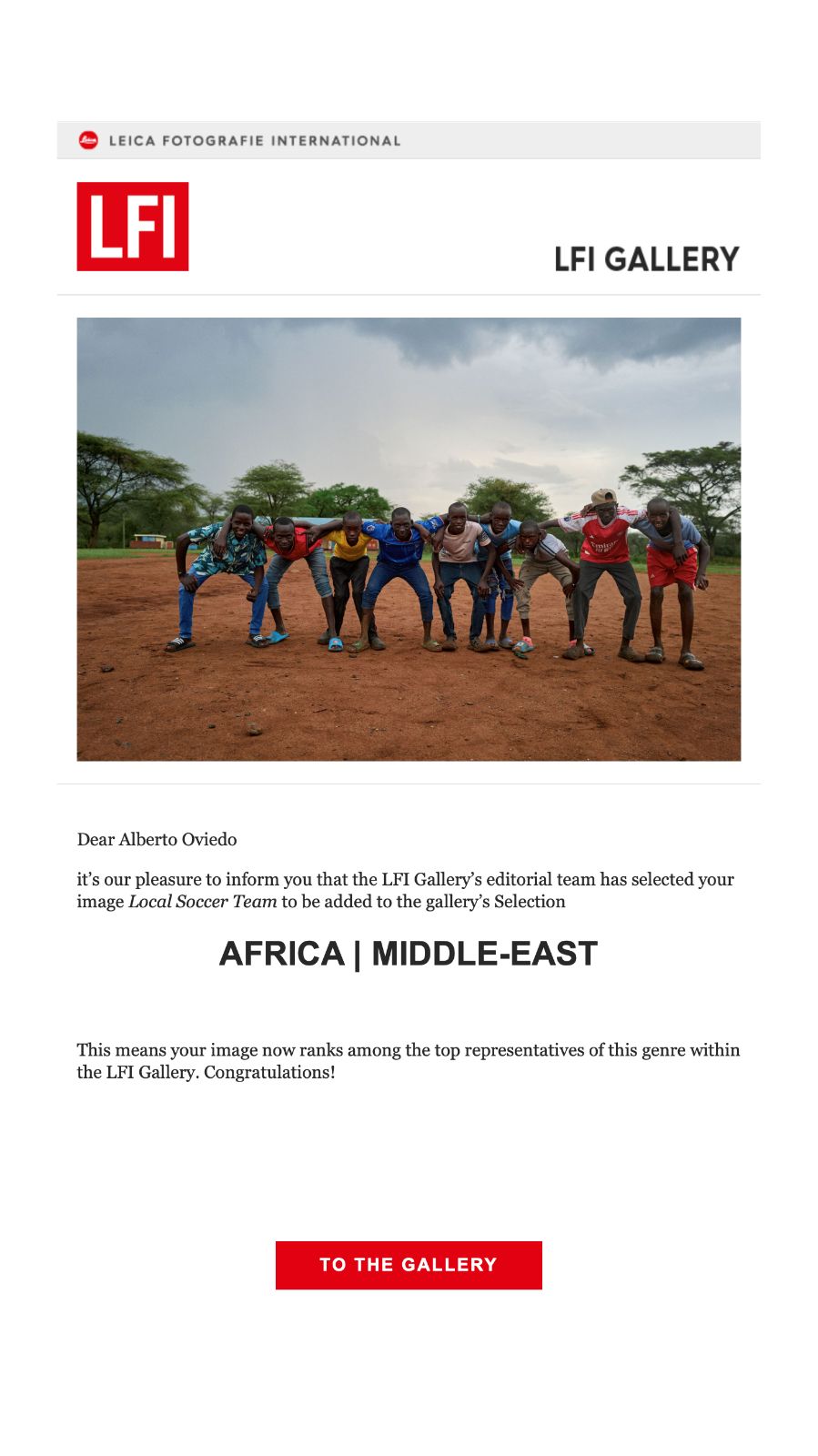
Reading the words on the screen, the sterile studio falls away, and I am transported right back to that dirt pitch. The recognition from a publication that has historically championed the finest documentary and editorial photography in the world is deeply humbling. It validates the quiet, patient approach to storytelling that I continuously strive for, whether I’m executing a massive, high-production commercial campaign for a client like Virgin Voyages, or simply wandering a rural dirt road abroad with a single body and lens. But far more importantly than my own validation, this editorial feature honors the boys themselves.
It elevates their impromptu, playful pose into a lasting, global testament of community. The gallery selection cements this single image in a much wider visual narrative, proving once again that the most profound and resonant moments don't require a wardrobe stylist, a lighting grid, or a meticulously planned mood board. They just require you to be completely present, to honor the natural light as it falls, and to deeply respect the subjects who are generous enough to allow you into their world for a brief moment.
The storm eventually broke with full force that evening in Iten, washing away the scuffed footprints on the pitch and turning the dust to mud. But inside the frame, the red earth remains suspended in time, and those linked arms remain proudly unbroken. A singular fraction of a second, held forever in the clay.