
Shooting Kart Tracks in Chile
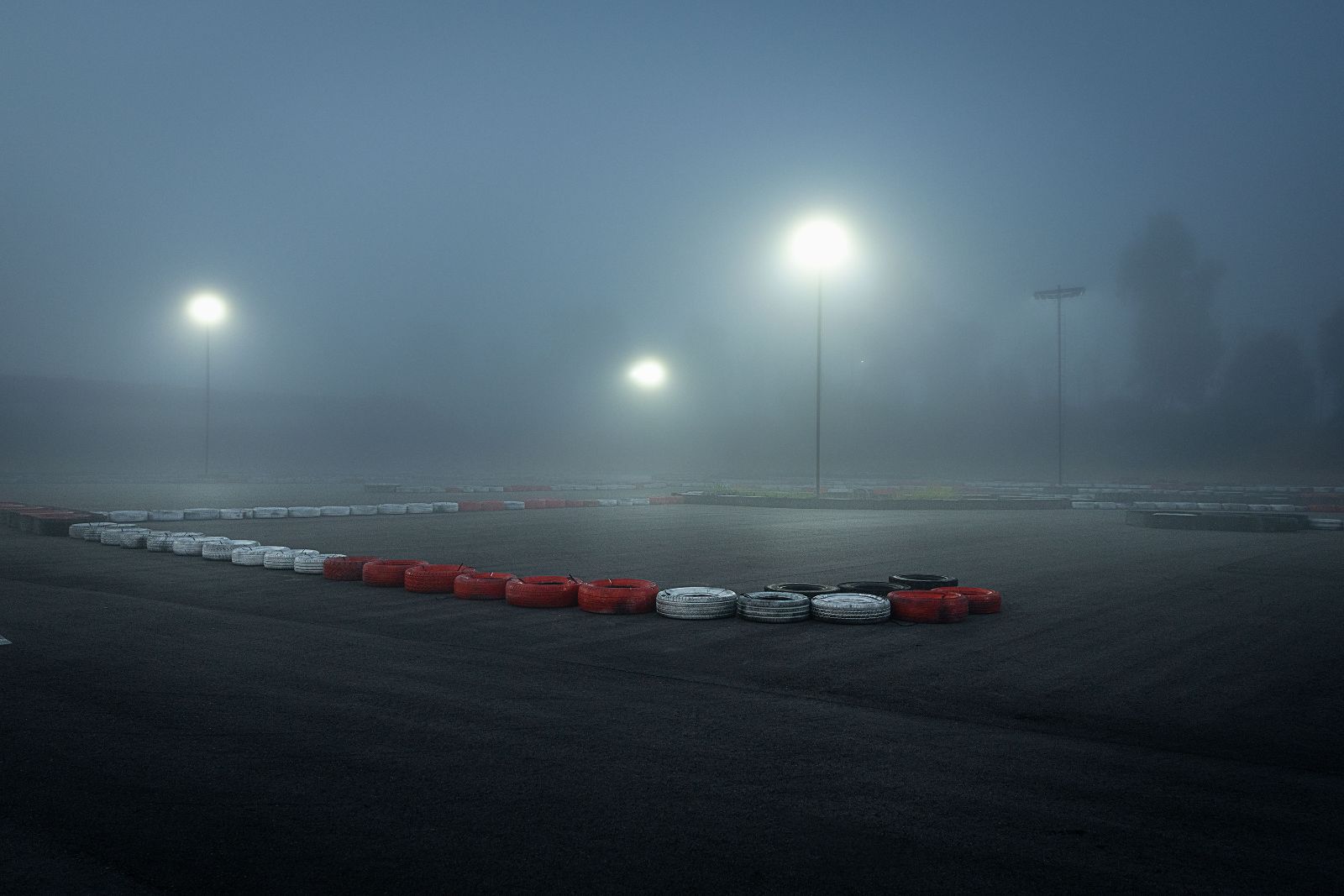
The fog in Santiago de Chile is not merely a weather condition; it is a physical weight, a thick blanket that swallows the landscape whole. Long before the horizon even threatens to bleed into dawn, I find myself standing alone on the slick, chilled asphalt of an abandoned karts track just outside the city limits. The air is violently cold, carrying the faint, metallic scent of damp earth and weathered rubber—a sharp, almost jarring contrast to the thick, humid embrace I am so accustomed to. As a Photographer Based in Miami Florida, my daily visual vocabulary is typically drenched in hard, unforgiving sunlight, vibrant pastels, and the kinetic, pulsing heat of the tropics. Out here, however, at five in the morning, the world is entirely stripped of its sun-soaked vibrancy. It is reduced, instead, to heavy, cinematic blues and the quiet, solitary hum of halogen stadium lamps attempting to punch through the mist. There are no roaring engines yet. There is no frantic, competitive energy. There is only the quiet geometry of painted tires snaking through the gloom like the spine of some dormant, mythical serpent.
To succeed as an Advertising Photographer is to master the art of precise engineering. Most of my days on the road are heavily dictated by the rigid structure of complex call sheets, ambitious client demands, and the relentless, ticking clock of a high-stakes set where chaos must be controlled. I am down here in the southern hemisphere executing high-end Commercial work on a massive, highly technical production with TCV Commercial. The primary set is loud, kinetic, and involves a small army of technicians, stylists, and creatives operating in absolute, orchestrated sync. But I have always believed that while a professional must serve the client, an artist must constantly feed the eye. This deeply quiet hour on an empty track is the necessary antidote to all that manufactured noise. This is the shadow shoot — a personal ritual I have also carried through a cat-filled Fresh Step set in Chicago and a rain-soaked Glad campaign in Toronto. It is an entirely personal series, a quiet visual meditation born from the primal urge to step away from the heavy machinery of the main crew and simply reconnect with the solitary, intimate act of looking. While the rest of the production sleeps comfortably in their hotels, I am out here chasing ghosts in the morning fog, the way I once chased the blue quiet of a Prague winter.
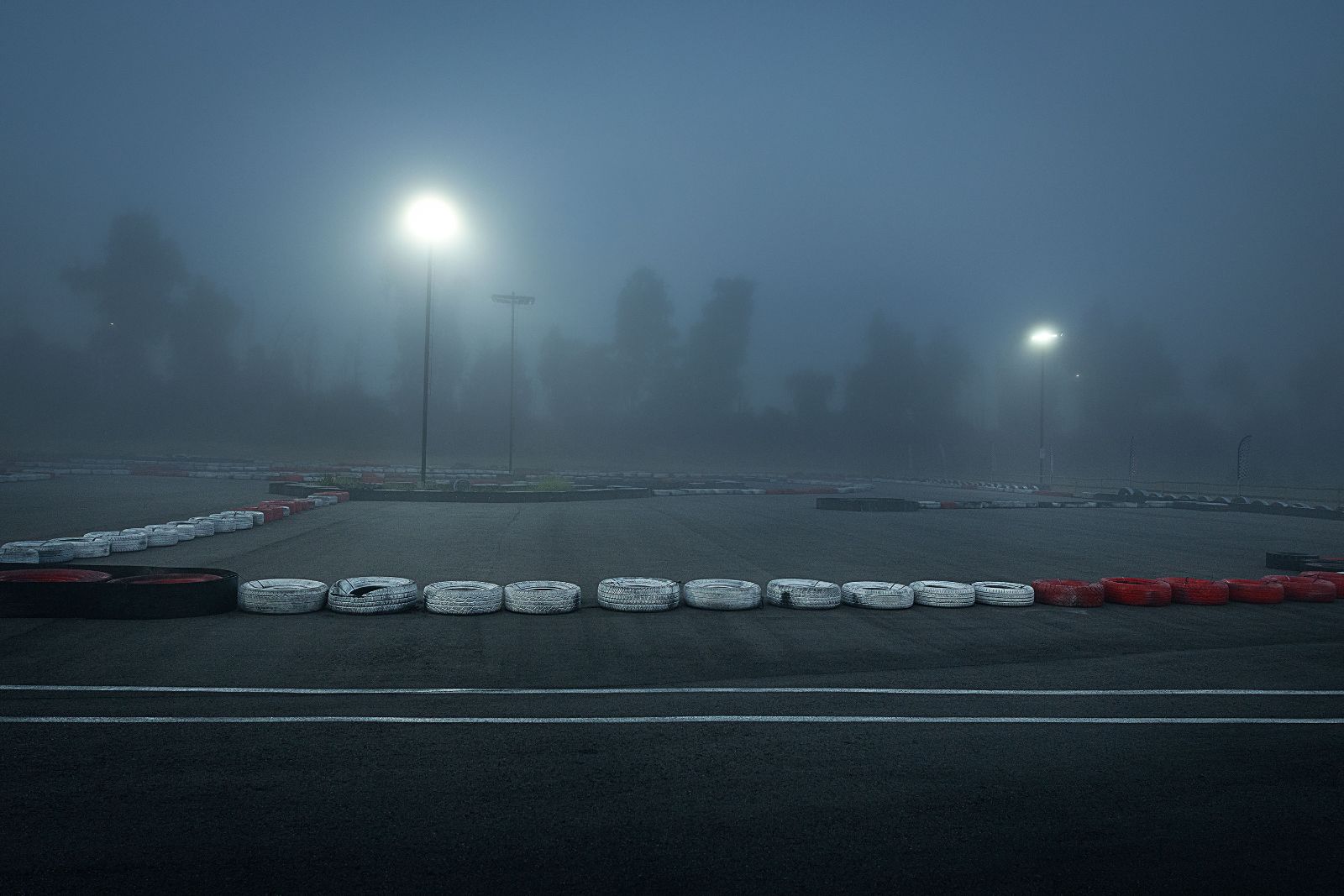
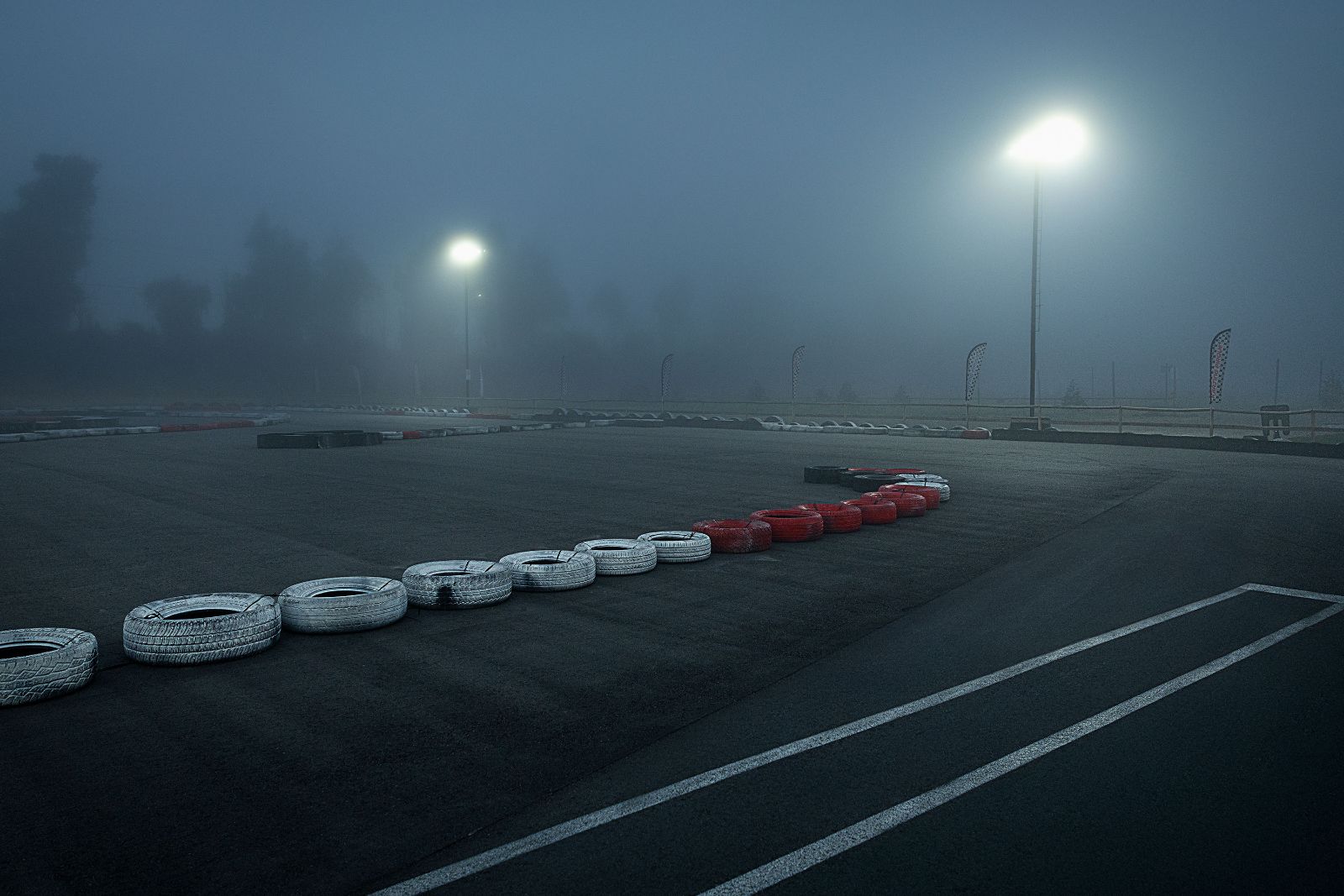
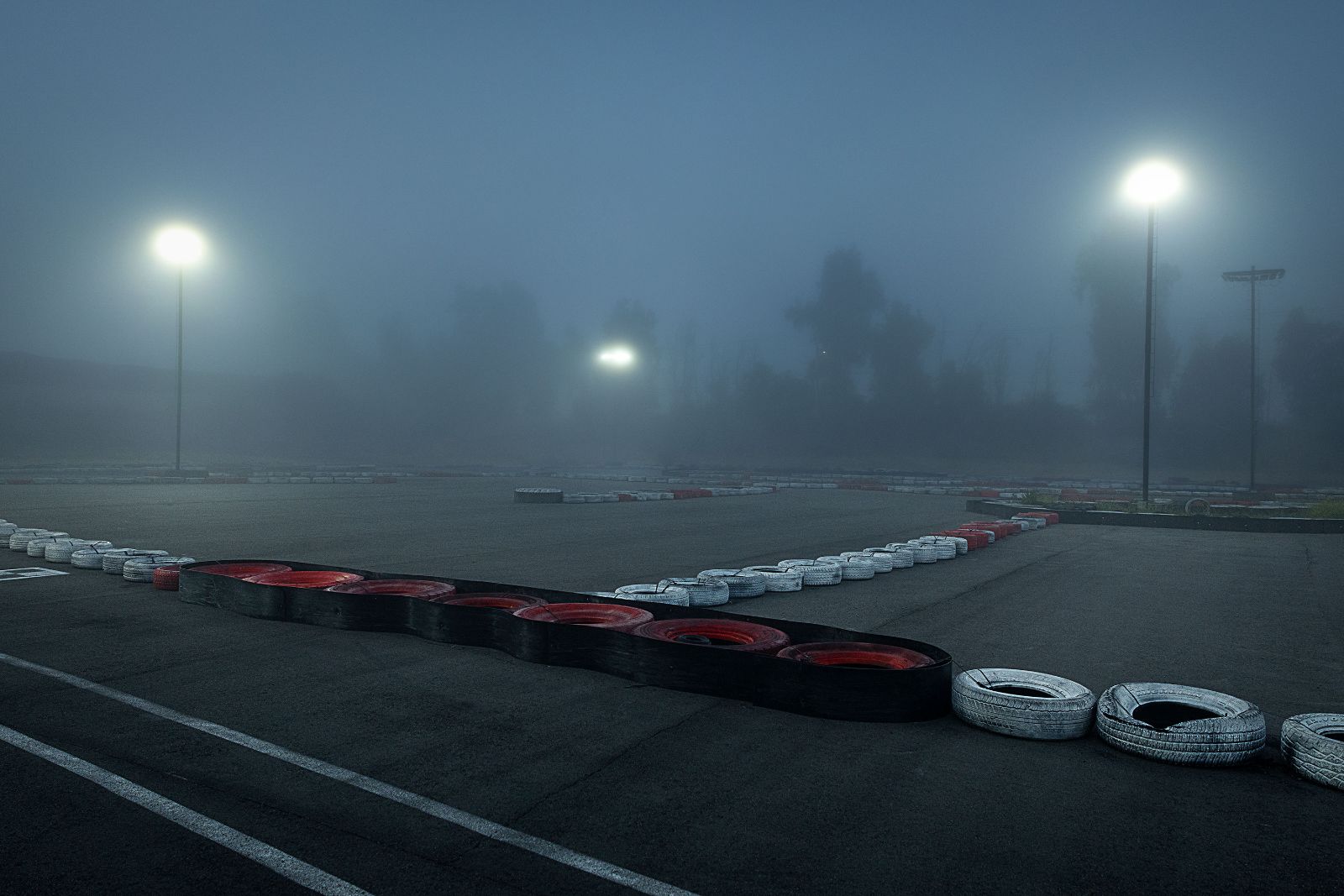
I walk the perimeter of the course slowly, my boots softly gripping the slick, obsidian tarmac. As the mist thickens and rolls rhythmically across the flat landscape, the long chains of tire barriers provide the only real punctuation of color in an otherwise monochromatic void. Upon closer inspection, the tires reveal their history—layers of white, crimson, and black paint peeling and scuffed by years of violent impacts. They curve, jag, and overlap, mapping out sharp hairpins and long straightaways that feel unnervingly ghostly under the pale glow. The towering halogens create isolated, glowing pools of luminescence that barely reach the asphalt, turning the suspended moisture in the air into a glowing, ethereal dust. There is a profound tension embedded here. This is a space engineered entirely for velocity, for adrenaline, for the aggressive friction of rubber against pavement. Yet, in this stolen, freezing pocket of time before the sunrise, it is paralyzed. My wide shots capture that very paradox—the latent, explosive energy humming just beneath the absolute silence.
I learned to read light on the vibrant, chaotic streets of Cuba and Colombia, and what those streets teach you is to look for the quiet spaces in between the noise. The most compelling story often unfolds when nobody else is paying attention to the stage. While normal Commercial work demands that I forcefully construct, shape, and command the light to sell a specific narrative, out here on the misty karts track, I am completely at the mercy of the atmosphere. I cannot flag this heavy fog. I cannot diffuse these towering, industrial stadium lamps. I can only wander, observe, and document the landscape as it reveals itself in agonizingly slow, beautiful increments.
Slowly, the deep, moody cyan shadows begin to lift, giving way to a muted, slate-gray morning. The halogens buzz softly above, their golden halos fading as the ambient light of the Chilean dawn finally begins to seep through the heavy overcast. The world is waking up. In a few hours, the spell will break. I will be back on set, surrounded by the beautiful, demanding noise of collaboration, directing talent and shaping light with pinpoint accuracy. But for now, as the icy condensation clings to my heavy jacket and the empty track stretches out into infinity, I am exactly where I need to be. The heaviest frames are always captured before the world remembers how to speak.