
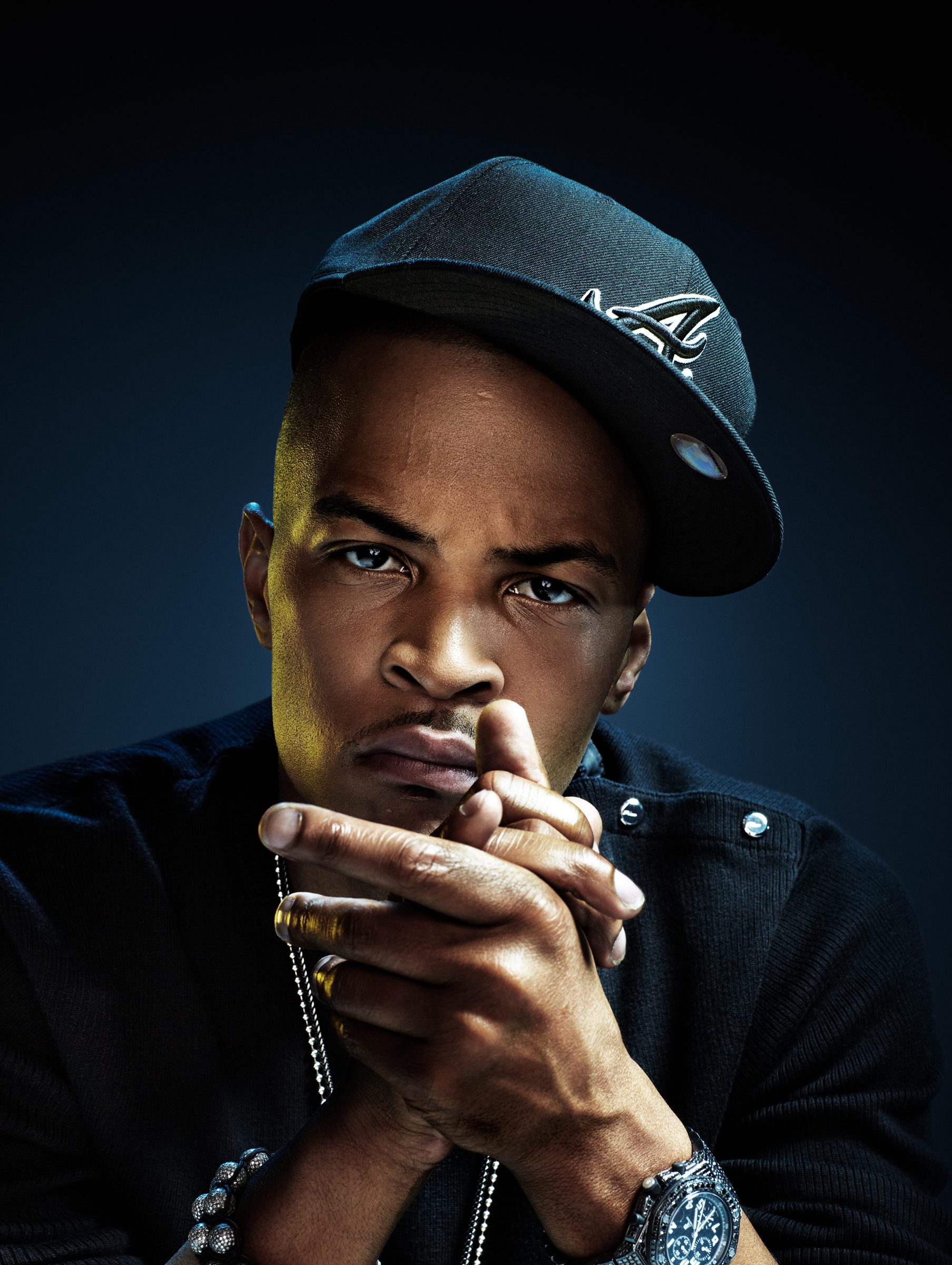
T.I. for Vibe Magazine
October 2011, Atlanta. T.I. had spent the year in and out of headlines that other people wrote about him, and the cover story Vibe Magazine was preparing turned on exactly that tension: the difference between the man the papers described and the man who walked into my set. We decided the shoot itself should argue the point. No cars, no jewelry trays, no entourage iconography — a typewriter, a stack of old newspapers, and the quietest star I had photographed all year.
The cover frame came first. Deep blue backdrop, Braves cap pulled level, hands clasped in front of his face — halfway between a prayer and a loaded gesture. What sells the image is his stillness. Some subjects perform for the lens; T.I. simply pressurizes the air around it. We barely spoke between frames. He would resettle, I would recompose, and the strobes did the rest.
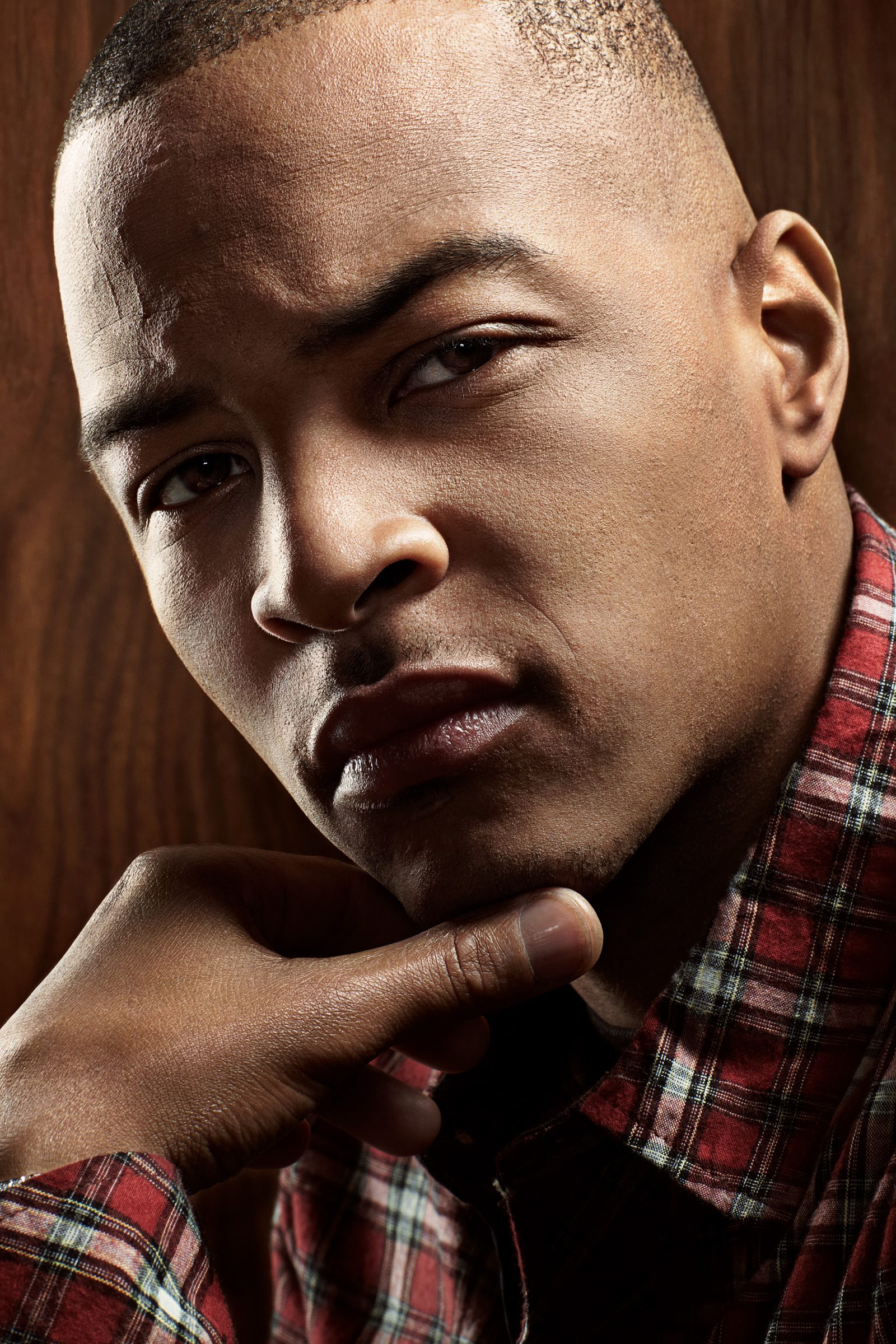
Against the wood paneling we went warmer and closer — plaid shirt, chin on hand, the searching look of a man mid-sentence in an argument with his own reputation.
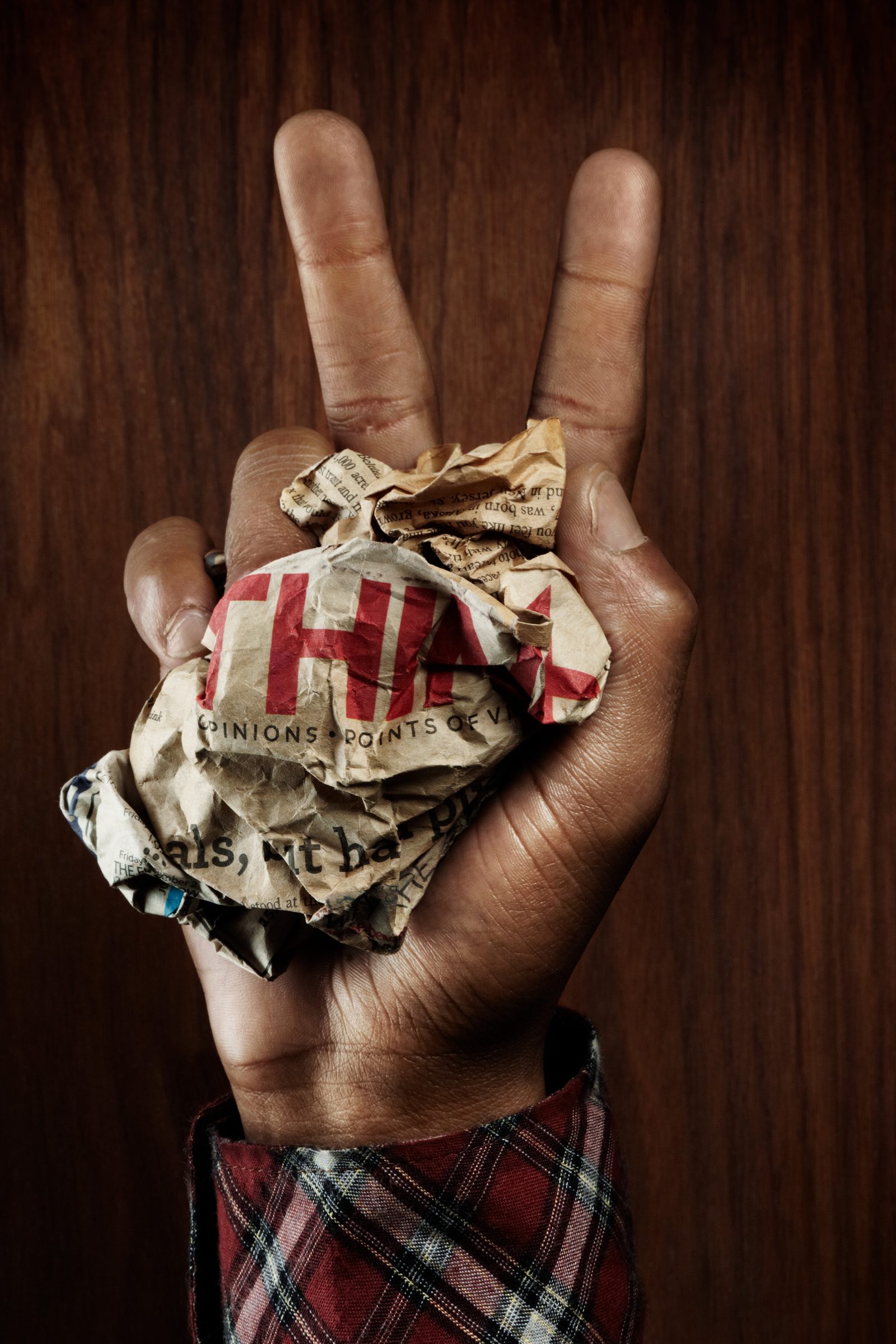
Then the papers came out. He crushed a page of headlines in his fist and threw a peace sign around the wreckage, and the concept clicked into a single image: commentary you can read at billboard distance.
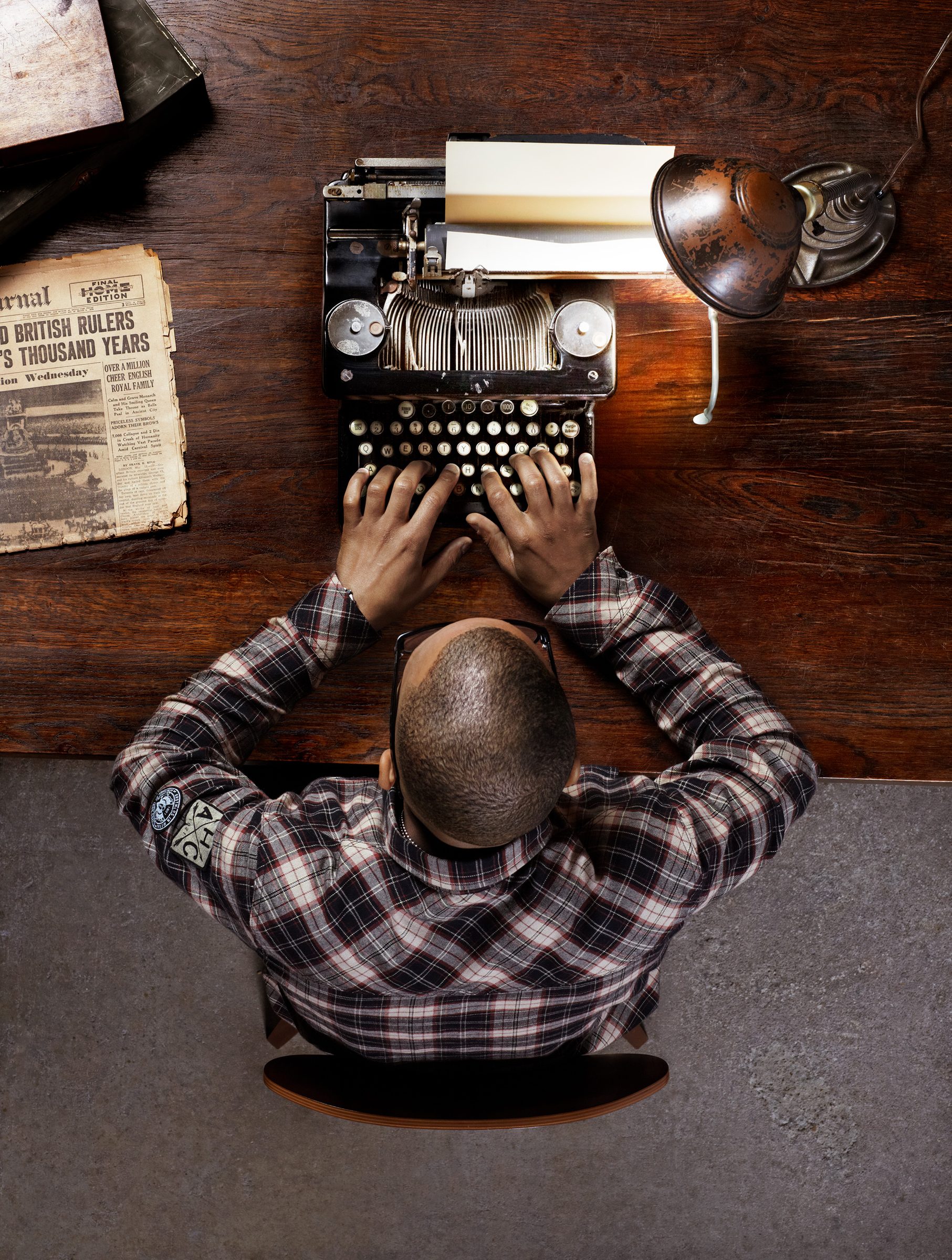
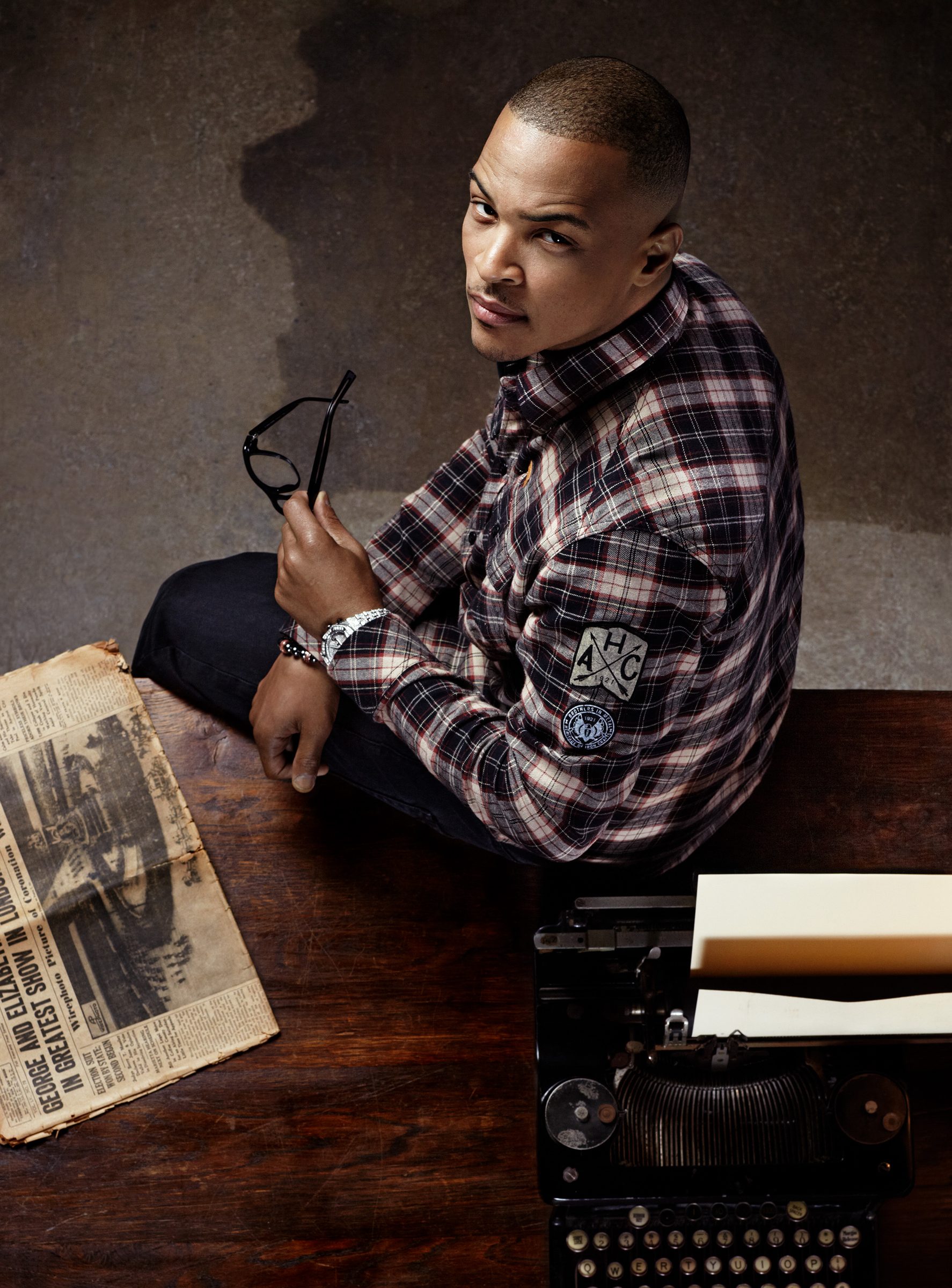
The typewriter setups closed the day — shot from directly overhead like a surveillance still, then from behind as he glanced back with glasses in hand. If the press was going to write his story anyway, the pictures would show him seizing the byline. A rapper at a writing desk should not feel radical, but the frame carries a whole counter-narrative in one prop.
Working with musicians of this stature became one of the defining threads of my editorial years — a run that continued with a militarized, Hendrix-tinged Lil Wayne cover for the same magazine and later distilled itself into a single quiet frame with André 3000. Different artists, same lesson: the louder the public story, the quieter the portrait should be.