

Bodyscapes
Some series begin with a concept; this one began with a squint. In the spring of 2012, model Michael was stretching between setups for something else entirely, and with my eyes half-closed his back stopped reading as anatomy. It read as landscape — ridgelines, valleys, weather. We scrapped the rest of the day and shot the terrain instead.
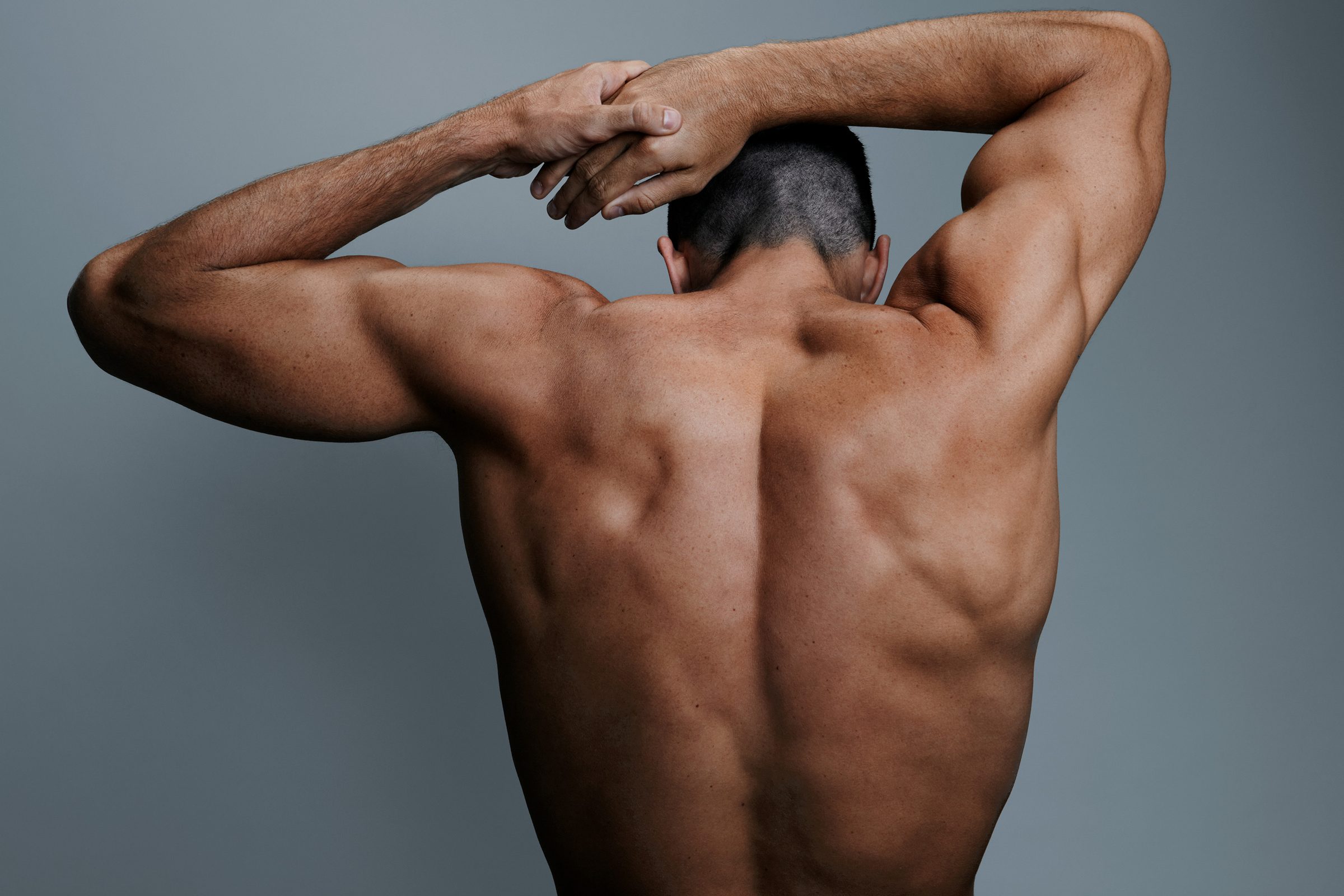
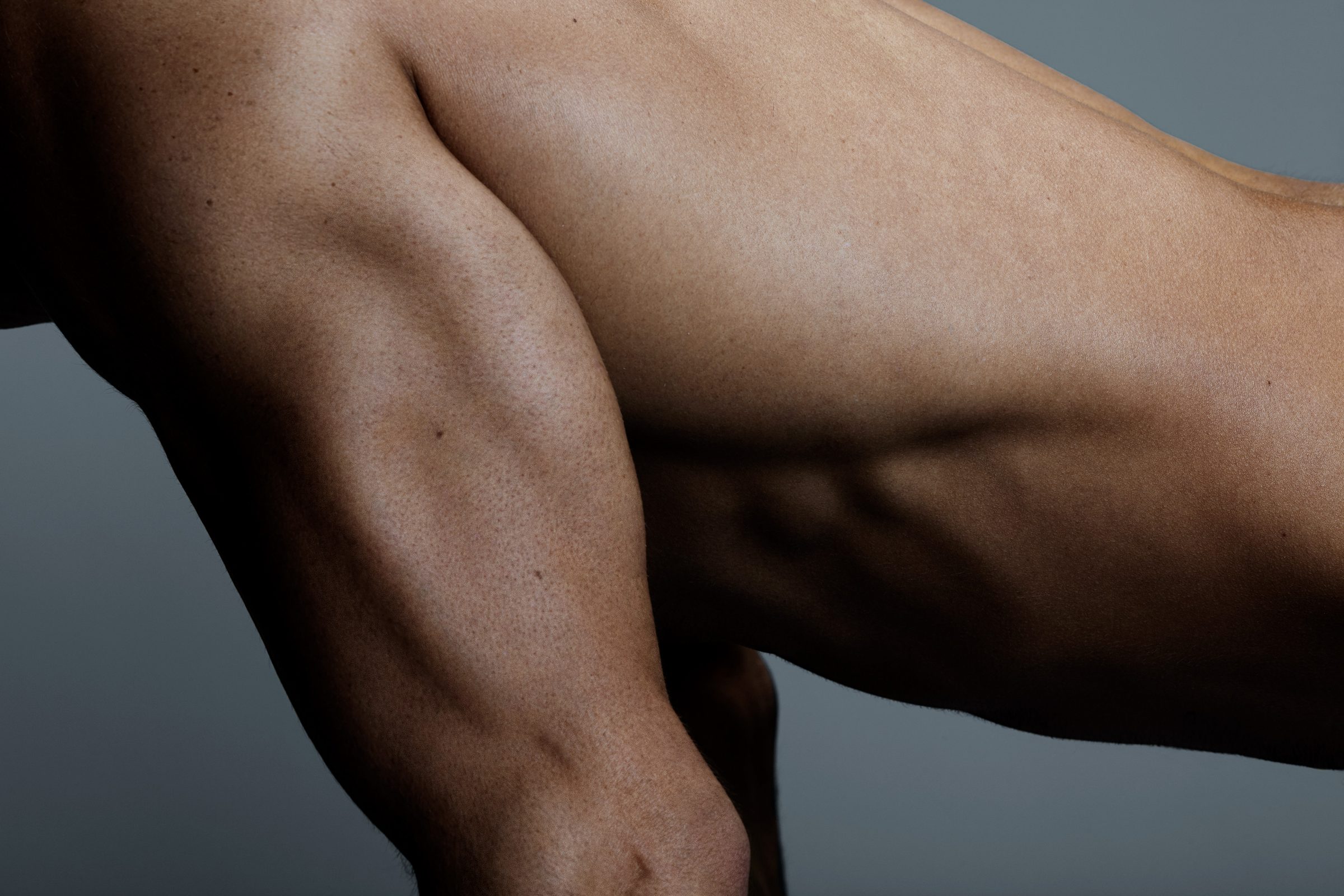
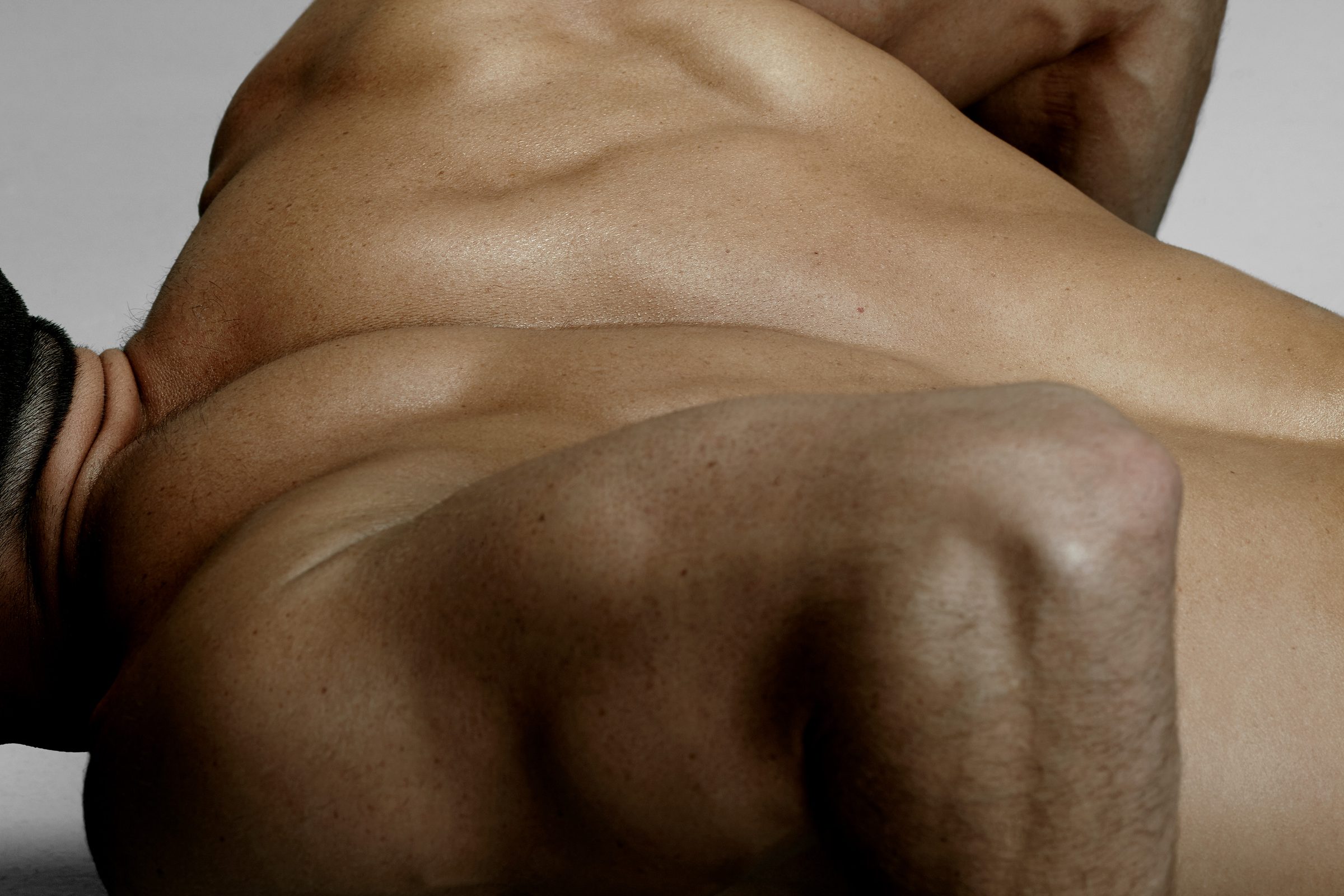
Bodyscapes is built on one strict rule: light the body the way the sun lights the desert, at a hard low angle that forces every contour to declare itself. One key light, no fill, a grey seamless sky. When Michael folded his arms behind his head, his shoulders opened like a mountain range; when he braced against the floor, his tricep became a canyon wall.

Framing was the second discipline. Crop out the horizon — the head, the hands, anything that lets the eye name what it sees — and skin becomes geography. I wanted each frame to sit for a half-second of confusion: dune or deltoid?
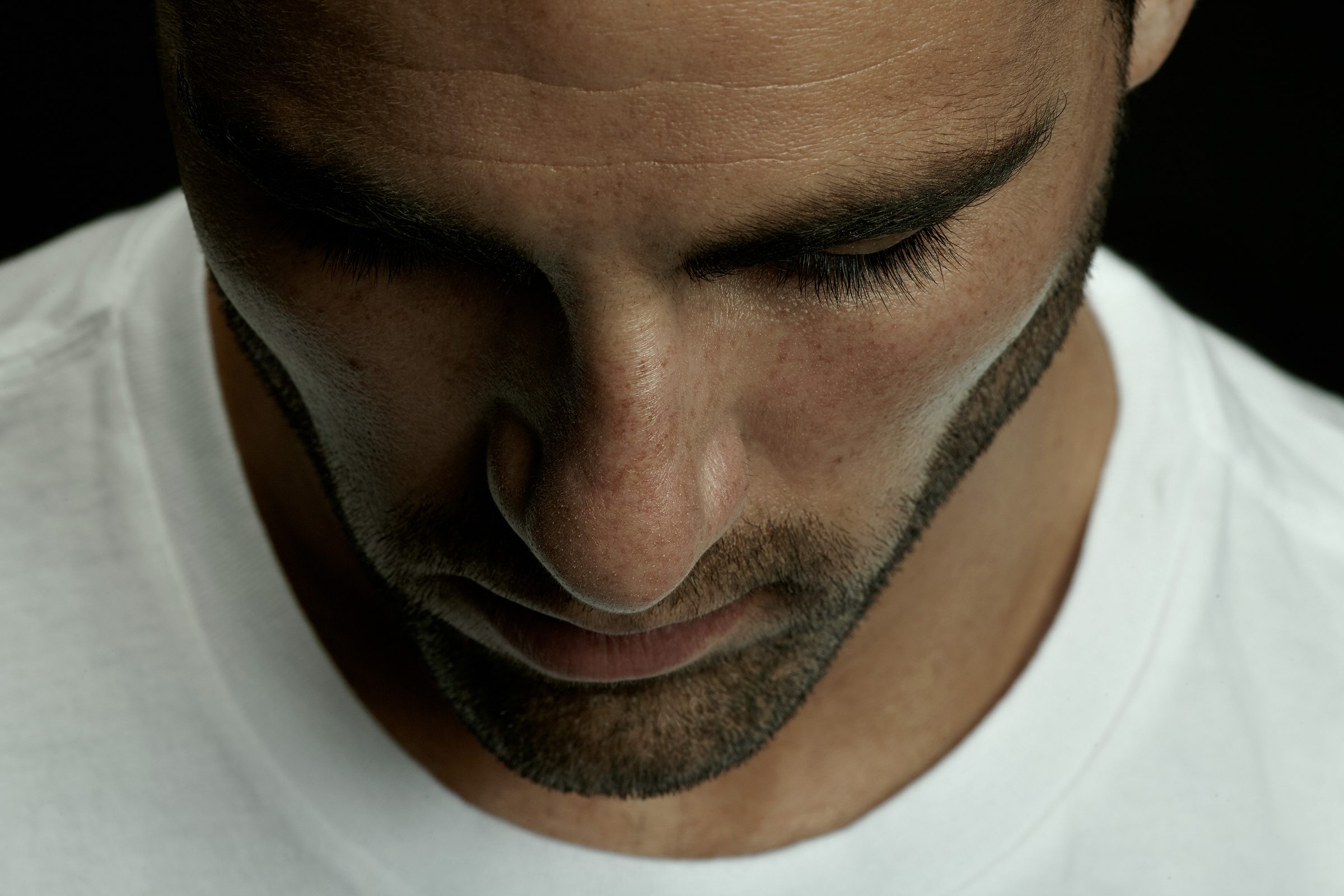
The one exception is the portrait. Face tipped down, eyes closed, white cotton against studio grey — a reminder that the landscape is inhabited. Without it the series risks turning the body into an object; with it, the geography stays human.

We finished on the widest plain of all, the chest in a single frame, every pore and hair sharp under the key light. No retouching beyond dust removal. The texture is the entire subject.
This study taught me how much narrative a few square inches of skin can carry, a lesson I pushed further the following year with a painted macro beauty series in New York, and that eventually shaped a campaign built from nothing but two touching profiles. The body, lit honestly, is the oldest landscape there is.