
Monochromatic Beauty
Beauty photography usually works by contrast — red lip against pale skin, dark liner against bright iris. In this New York studio session we asked the opposite question: what happens when makeup stops contrasting with the face and starts erasing it? One model, one wide flat brush, and one bucket-shade of paint mixed to precisely her own skin tone.
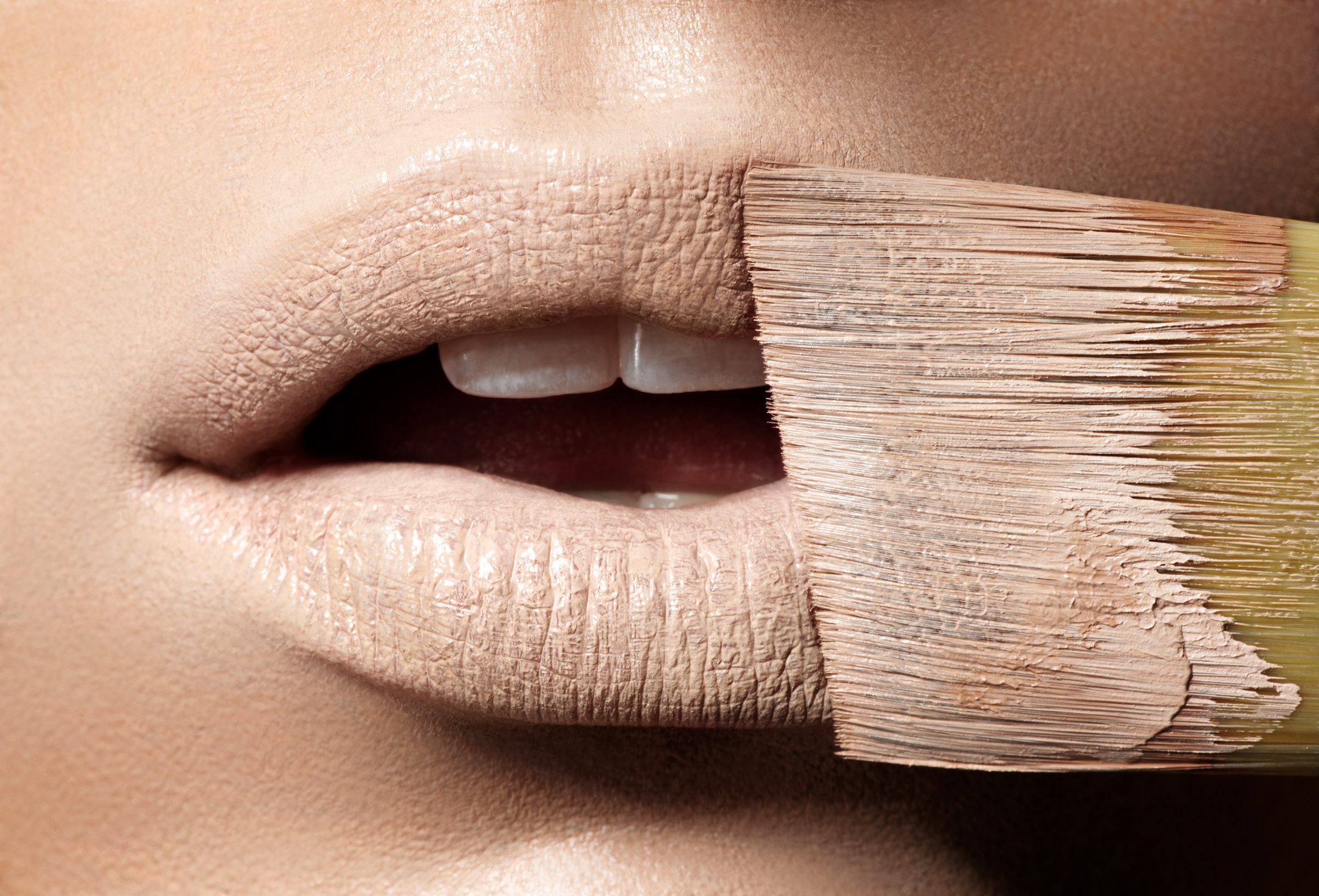
The lips went first. In extreme macro, the brush drags its wet nude stroke across the mouth's natural texture — cracks, ridges, the soft seam where lip meets skin — and the color difference between paint and person nearly vanishes. What remains is pure surface: the photograph becomes about texture the way my Bodyscapes series was about terrain, a study of the same subject at one-hundredth the distance.
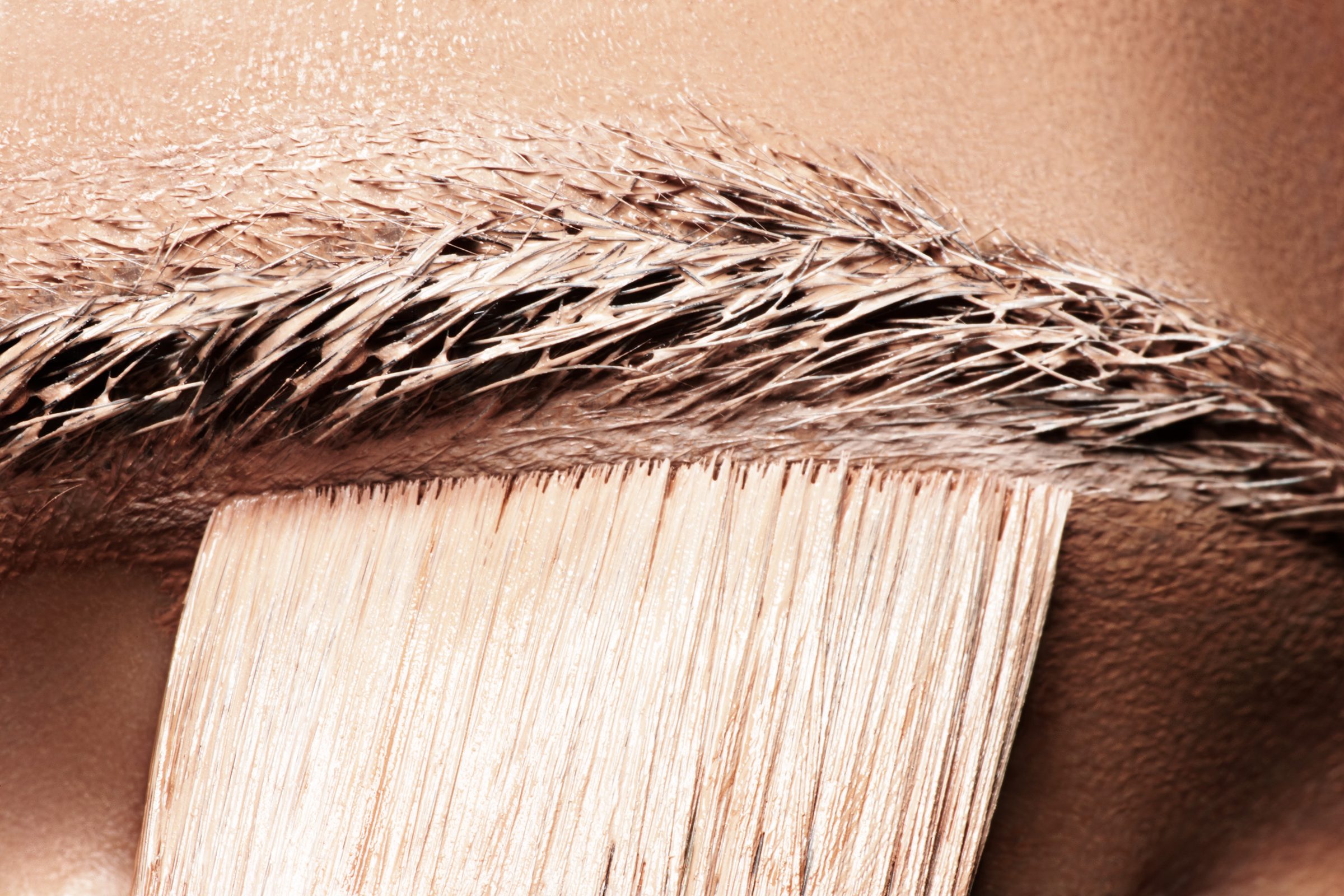
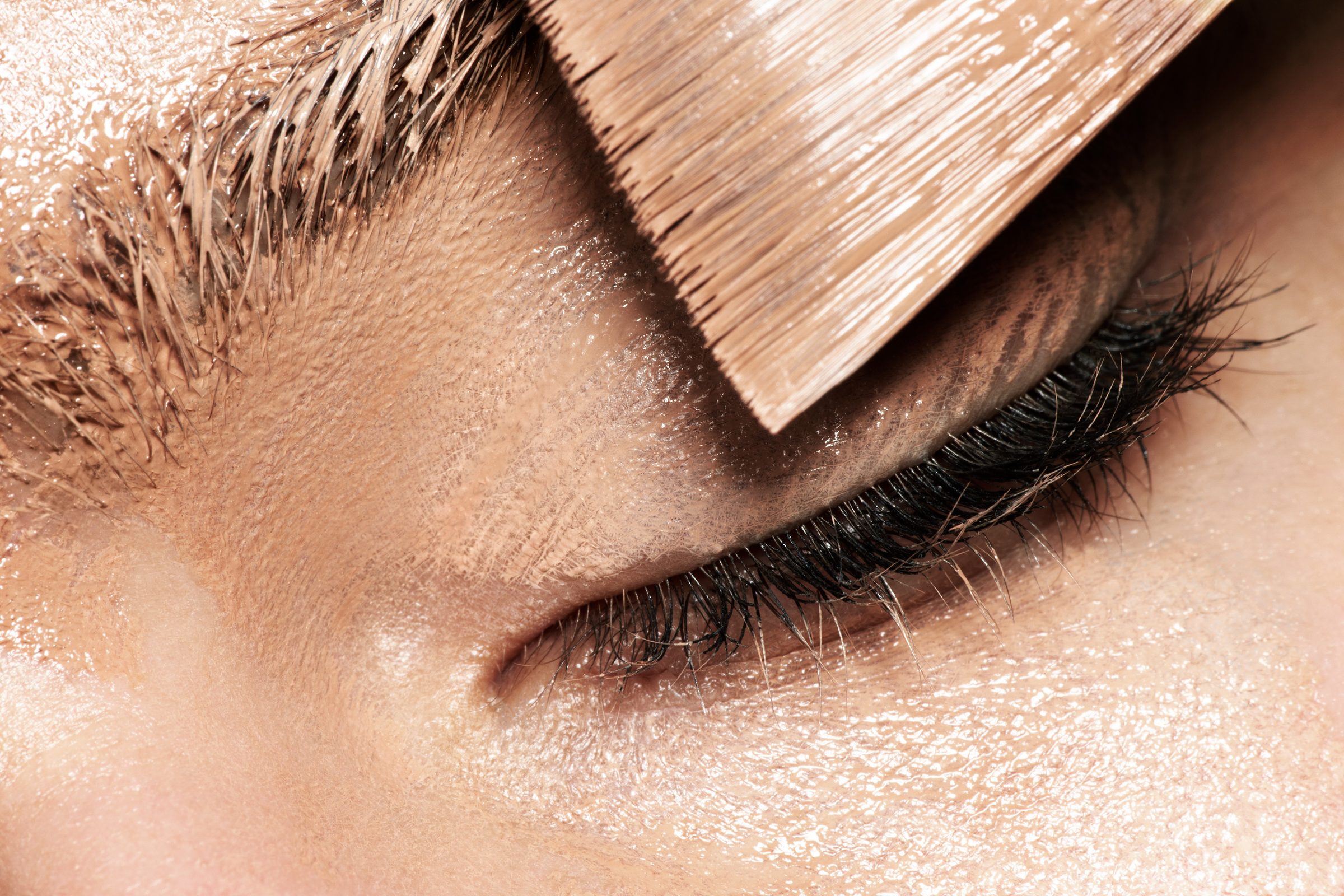
Then the brow, painted against the grain so each hair carries its load of pigment like a wheat field after rain. Then the eye: bristles descending over the closed lid, lashes left defiantly black — the one element of the face we allowed to keep its contrast, and the detail every viewer's eye runs to first. Deprive the frame of color relationships and the gaze goes hunting for whatever variation is left. That hunt is the picture.
Technically it is an unforgiving way to work. At this magnification depth of field is measured in millimeters, so the model held still the way dancers hold still — actively, with effort — while the makeup artist and I negotiated each stroke's timing. Wet paint photographs alive for about ninety seconds before it dulls. We worked in ninety-second sentences.
I think of this series as the quietest thing I have ever shot, and a hinge in how I approach faces under studio light — a discipline that runs from these macro frames through the stillness of a certain Atlanta portrait and the composed severity of a T.I. cover built on silence. Sometimes the strongest statement a photograph can make is to almost disappear.