
André 3000
Some sessions fill a hard drive. This one comes down to a single photograph, and I have never once wished for more.
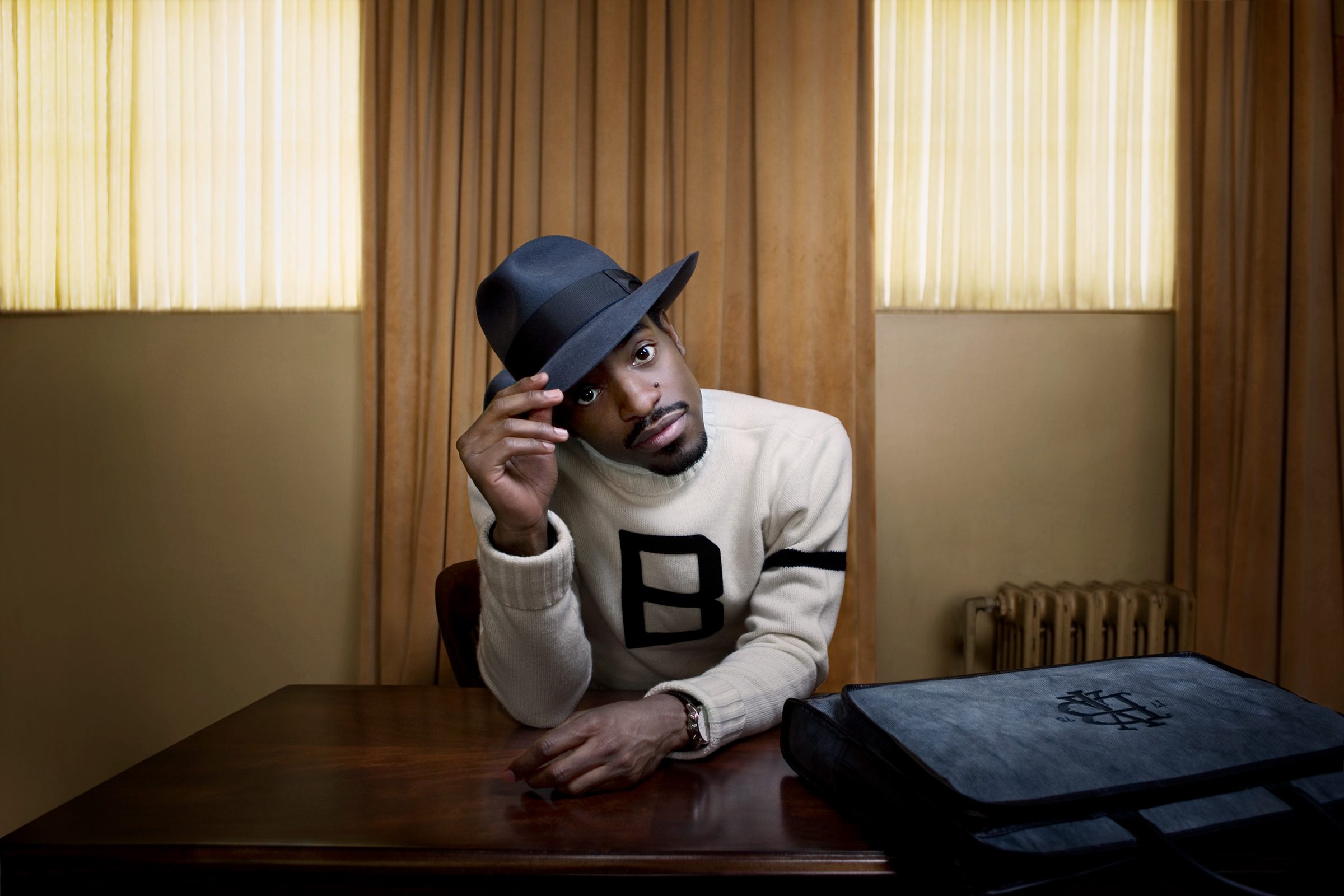
April 2012, Atlanta. André 3000 arrived the way his verses do — precisely, on his own clock, dressed like a question the rest of the room wasn't stylish enough to answer: cream varsity knit, grey fedora, a wristwatch older than half my crew. We had a room dressed with amber curtains, a bare wooden table, and a radiator that looked borrowed from a 1940s railway hotel. The plan was a full editorial take: standing setups, detail frames, the usual coverage.
Then he sat down, rested one elbow on the table, and tipped the brim of the fedora with two fingers — half greeting, half farewell — and looked straight down the lens. I made the frame. I checked the back of the camera. And I understood, with the certainty you maybe get twice a decade, that the shoot was over. Everything the portrait needed was already inside it: the curtained window light striping the wall, the geometry of the table meeting the radiator, the theatrical courtesy of that gesture from a man who spent a career perfecting the entrance and the exit.
Coverage is insurance, and insurance is what you buy when you don't trust the moment. With André the moment was the entire assignment. He is perhaps the only artist I have photographed whose stillness feels louder than other people's motion — a southern gentleman surrealist, sincere and in on the joke at once.
The frame sits in a lineage for me. The same editorial season produced a typewriter-and-headlines cover session with T.I. and a flag-draped, Stratocaster-slinging Lil Wayne for Vibe — full productions, dozens of setups. André 3000 needed one chair, one hat, one gesture. Great portraiture is not about how much you shoot. It is about recognizing the second the photograph arrives, and having the discipline to stop.